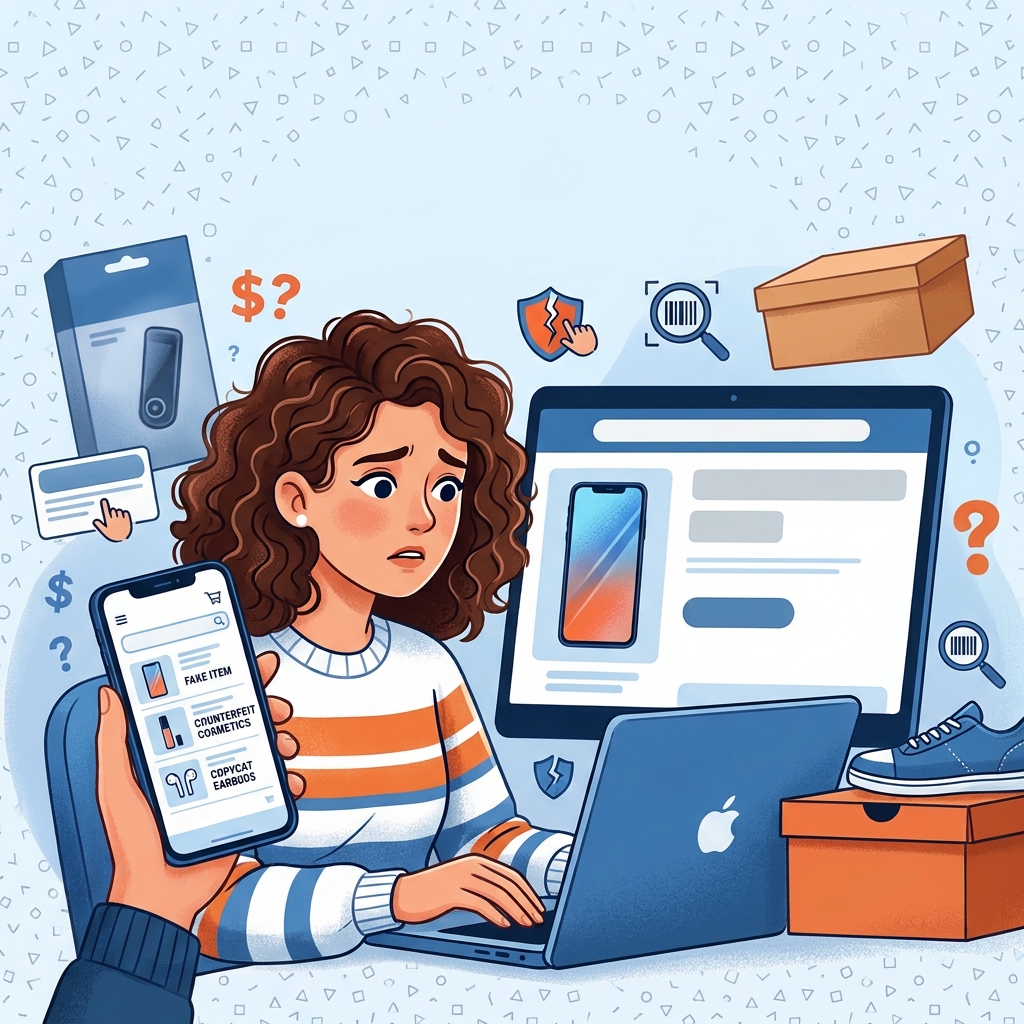
Shopping on major online marketplaces like Amazon, Walmart, eBay, and Poshmark makes hunting for deals effortless. However, because these platforms allow millions of independent third-party vendors to list items alongside official brands, counterfeit merchandise has become an increasingly common risk.
Spotting a fake isn’t just about saving money – counterfeit electronics, cosmetics, supplements, and safety gear (like car seats or bike helmets) can pose serious health and safety hazards. Here is your practical guide to inspecting listings, verifying sellers, and avoiding counterfeit products when shopping online.
1. Always Check the “Ships From” and “Sold By” Lines
Just because you are browsing on a trusted retailer’s website doesn’t mean the retailer itself is selling the product. Before hitting “Add to Cart,” look directly below the buy button to see who owns and fulfills the inventory.
| Listing Label | What It Means | Risk Level |
| Ships from and sold by [Retailer] (e.g., Amazon.com or Walmart.com) | The retailer purchased the inventory directly from the brand. | Low (Safest option) |
| Sold by [Third Party] & Fulfilled by [Retailer] | A third-party vendor owns the item and stores it in the retailer’s warehouse. | Moderate (Inspect the seller first) |
| Ships from and sold by [Third Party] | An independent vendor handles both inventory and shipping directly. | Highest (Requires thorough vetting) |
Pro Tip: Use the left-hand search filter on Amazon or Walmart to check the box for “Sold by Amazon.com” or “Sold by Walmart” when shopping for high-risk items like skincare, headphones, or memory cards.
2. Investigate the Third-Party Seller Profile
If an item is sold by a third party, click on the seller’s storefront name to inspect their track record before buying:
- Watch Out for “Just Launched” Badges: Counterfeiters frequently open burner accounts, dump fake goods during peak sales, and disappear before negative reviews catch up. Avoid new sellers with zero or minimal feedback.
- Check the Seller Name & Address: Be wary of storefront names consisting of random strings of letters (e.g., XZYQWEStore) or business addresses listed at unrelated residential homes.
- Look at Their Product Catalog: Click “View Storefront.” If a seller claims to sell authentic luxury handbags alongside cheap phone cables, generic pet toys, and random auto parts, they are likely a liquidator or counterfeit reseller rather than an authorized dealer.
3. Spot Fake & Hijacked Product Reviews
A 4.8-star rating with thousands of reviews doesn’t guarantee authenticity. Scammers regularly manipulate review systems using two common tactics:
- Review Hijacking: A seller takes over an older, discontinued listing that already has thousands of 5-star reviews (say, for a cheap phone case) and swaps the photos and title to sell counterfeit electronics. Always sort reviews by “Most Recent” and verify that reviewers are actually talking about the product currently shown in the listing.
- Paid Review Clusters: Look for dozens of glowing 5-star reviews posted within a 48-hour window, repetitive phrasing, broken grammar, or generic stock-style photos.
4. Watch Out for Price & Shipping Red Flags
- “Too Good to Be True” Pricing: Authentic high-demand brands (like Apple, Dyson, Lego, or Nike) rarely drop 60%–70% below retail price outside of major, verified storewide events. Use a price history tracker to check the item’s normal baseline price.
- Unusually Long Shipping Windows: If a standard item shows a 3-to-5-week delivery window, it is often being drop-shipped from an unverified overseas supplier.
- Requests to Pay or Message Off-Platform: Never comply if a marketplace seller asks you to finalize payment via Zelle, Cash App, Venmo, or crypto, or asks to move the chat to WhatsApp or text. Keeping communication and payment inside the marketplace preserves your buyer protection.
5. Inspect Packaging & Serial Numbers Upon Arrival
Even careful shoppers occasionally receive a knockoff. Do a quick 60-second inspection as soon as your package arrives:
- Check Print & Packaging Quality: Blurry logos, typos on the box, flimsy cardboard, or missing tamper seals are immediate giveaways.
- Verify the Serial Number: For electronics, power tools, and designer goods, locate the serial number on the item itself (not just the box) and verify it on the manufacturer’s official warranty registration page.
- Compare Weight and Materials: Counterfeit chargers, earbuds, and beauty products often feel noticeably lighter than genuine versions due to missing internal components or cheap plastics.
What to Do If You Receive a Counterfeit
If you suspect you’ve been sent a fake, stop using the item immediately (especially cosmetics, chargers, or supplements). Take clear photos of the packaging, shipping label, and product defects, and initiate a return directly through the marketplace’s A-to-Z Guarantee / Buyer Protection portal rather than negotiating privately with the seller.
No responses yet